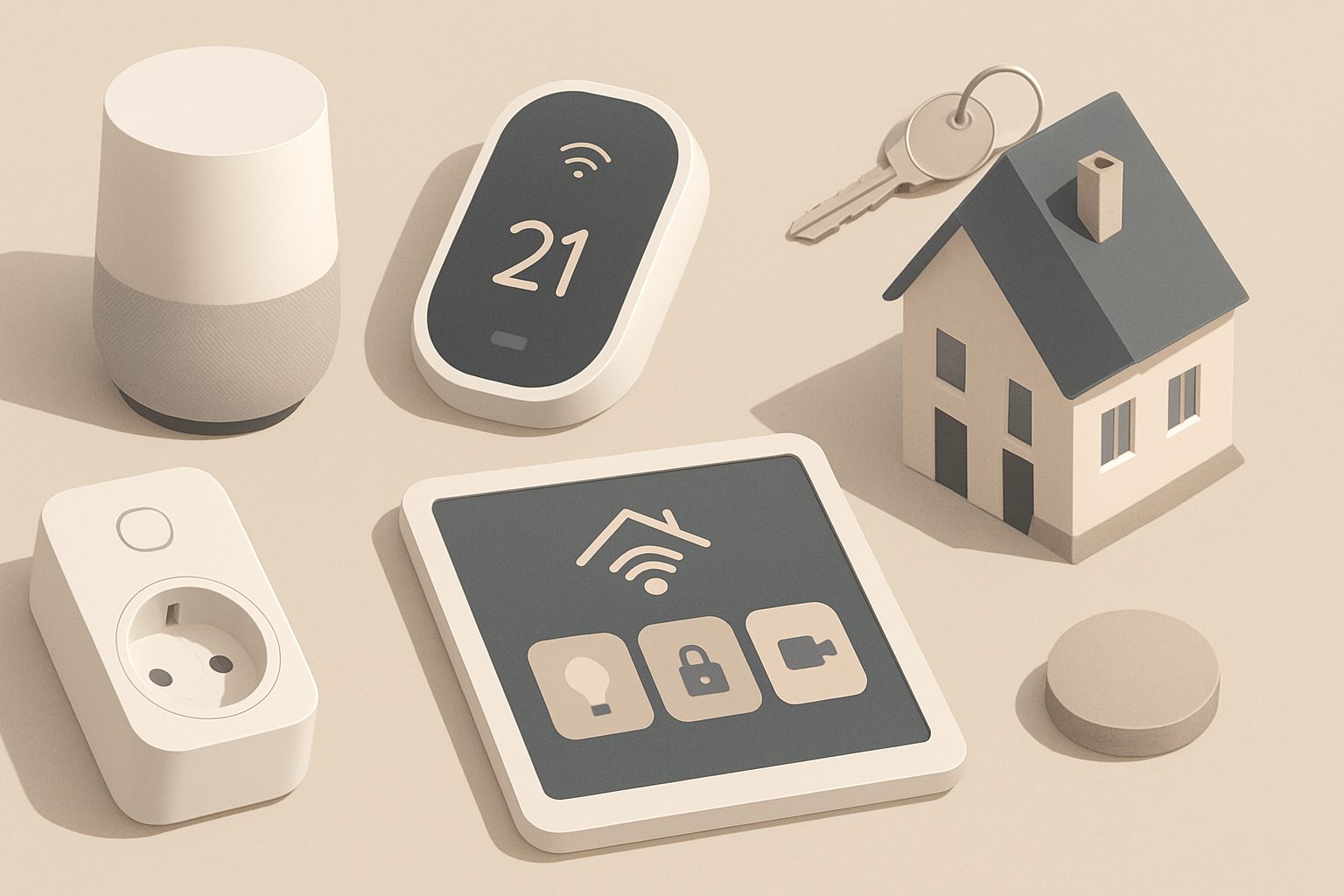
Google Home vs Amazon Alexa vs Apple HomeKit UK – Which Ecosystem Wins in 2026?
The smart home market in the UK has matured considerably. What was once a niche hobby is now mainstream, with serious integration options into utilities, heating systems, and energy monitoring. But choosing between Google Home, Amazon Alexa, and Apple HomeKit remains genuinely difficult because each ecosystem plays by different rules, and the "best" choice depends entirely on what you own and what you value most.
Pricing and Initial Investment
Amazon Alexa is the cheapest entry point. An Echo Dot costs around £35–40, a basic Echo smart speaker £60–80. You can build a functional Alexa setup for under £150. Google Home is similarly priced: the Nest Mini runs £40–50, Nest Audio £60–70. Both are genuinely affordable.
Apple HomeKit is immediately more expensive. The HomePod mini starts at £89, and you'll likely need it as a hub if you want automations and remote access. If you don't already own an iPhone, iPad, or Mac, HomeKit requires a bigger upfront investment in Apple hardware too.
However, "cheapest" doesn't mean "best value". Amazon and Google ecosystems lock you into their services and advertising (both companies make money from your data and recommendations). Apple's higher price partly reflects the lack of tracking—HomeKit devices work primarily on your home network, and Siri doesn't profile your behaviour for ad targeting.
Device Compatibility and Ecosystem Breadth
This is where Amazon and Google pull ahead. Both have thousands of compatible devices: smart bulbs, plugs, thermostats, cameras, kitchen appliances. Most third-party devices support Alexa or Google Home. Integration is straightforward—most work out of the box.
HomeKit has fewer devices, but the gap is closing. Nanoleaf, Eve, Logitech, and others now make HomeKit-compatible gear. But you won't find as many budget Chinese smart plugs or lights certified for HomeKit. If you need specific devices—say, a particular smart doorbell or heating controller—check compatibility before committing.
The Philips Hue ecosystem, widely used in UK homes, works with all three, though HomeKit's integration is the tightest.
Privacy and Data Handling
This is fundamental and often overlooked. Amazon records your voice interactions unless you delete them monthly. Google does the same. Both companies explicitly state they use this data to improve services and ads. If you're uncomfortable with that, neither is ideal.
Apple doesn't record or retain your voice commands. HomeKit data stays on your home hub (or iCloud if you choose remote access). This isn't marketing—it's how Apple's architecture works. The trade-off is less ability to improve Siri through machine learning, so voice recognition is genuinely less sophisticated than Alexa or Google Assistant.
In 2026, data privacy matters more than it did five years ago. GDPR enforcement is tighter, and UK households increasingly care about surveillance. That said, Amazon and Google both offer transparency reports and industry-standard security. They're not malicious—they're just monetising data differently than Apple.
UK-Specific Integrations
This is critical and often missed in comparisons. British Gas Hive integrates well with Alexa and Google Home. Octopus Energy smart meters work with Alexa for energy reporting. BT TV and Virgin Media systems support both Amazon and Google. If you're on these UK utilities or services, Alexa or Google is the natural choice.
HomeKit has fewer UK integrations. You can see Eve smart plugs pulling real-time energy data, which is useful for monitoring consumption. But Octopus Energy integration is missing, and British Gas compatibility is limited. If UK smart grid integration matters to you, Amazon or Google is more practical.
Voice Assistant Quality and Control
Alexa is the most responsive and fastest at executing commands. It's also been optimized for smart home control longer than the others. If you want reliability for automations and routines, Alexa has the edge.
Google Assistant is nearly as good and has better natural language understanding. You can say "turn on the bedroom lights and play jazz" and it usually works. Alexa sometimes misinterprets compound commands.
Siri is improving but still less natural for smart home control. It's fine for simple commands but struggles with complex requests or ambiguity.
Heating and Climate Control
Heating integration is crucial in UK homes. Nest (Google) and Tado make excellent thermostats compatible with all three ecosystems. Hive (British Gas) prioritizes Alexa and Google. If you have an existing boiler that isn't smart, most plumbers will recommend Nest or Hive because they integrate cleanly with popular assistants.
The Real Choice
Choose Alexa if: You want the cheapest entry, the broadest device compatibility, UK integration (British Gas, Octopus Energy), and proven reliability for automations. Most UK homes already have something Alexa-compatible.
Choose Google Home if: You value natural language processing and already use Google services. It's nearly as compatible as Alexa and slightly better at understanding conversational requests.
Choose HomeKit if: You own multiple Apple devices, prioritize privacy above all else, and don't mind paying more for fewer but more secure devices. It's also worth choosing if you specifically want air-gapped local control.
In practice, most UK households end up with Alexa because it's affordable, ubiquitous, and plays well with existing UK infrastructure. But that doesn't make it objectively best—it makes it the practical choice for budget-conscious adopters. Google is the intelligent alternative. HomeKit remains the privacy-first option for Apple-centric households.
The smartest approach: start with one ecosystem, choose based on price and your current devices, then commit to it. Switching later is costly and frustrating. You don't need the "perfect" ecosystem—you need the one that fits your home today.
More options
- Amazon Echo & Smart Home Hubs (Amazon UK)
- Smart Thermostats (Hive, Tado, Nest) (Amazon UK)
- Smart Lighting Starter Kits (Philips Hue, LIFX, WiZ) (Amazon UK)
- Smart Security Cameras & Video Doorbells (Amazon UK)
- Smart Plugs & Home Automation Accessories (Amazon UK)