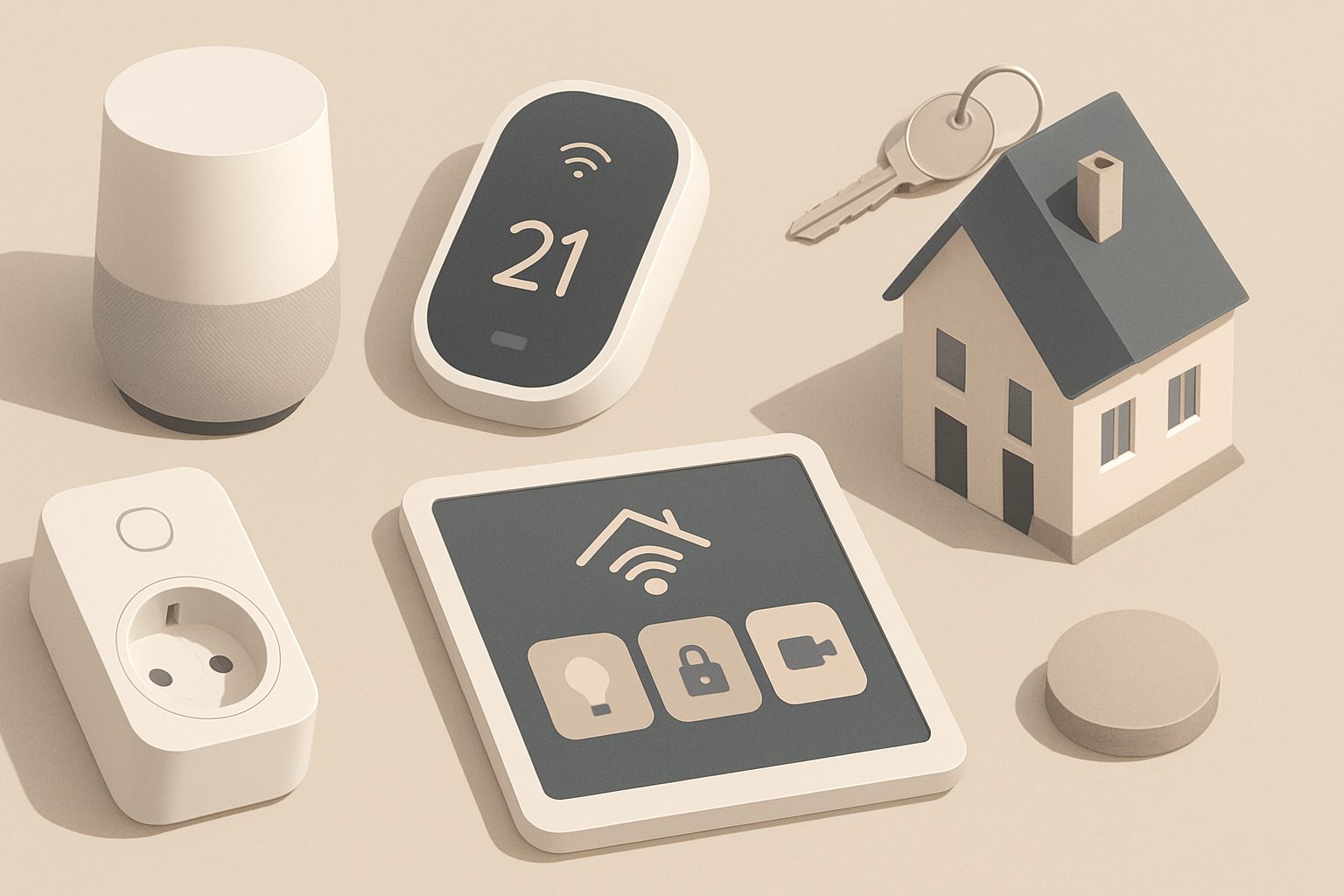
Best Smart Home Systems for UK Flats & Apartments – Compact Solutions 2026
Smart home automation works differently in a flat than a house. You can't rewire walls, drill through brick for outdoor cameras, or make permanent changes without permission. But that doesn't mean you're locked out of automation—it just means choosing systems designed for rented or leasehold properties.
The Flat-Specific Challenge
Most smart home guides assume you own your property and can modify it. Flats come with different constraints: landlord approval, shared walls, communal entrances, and storage limitations. You need systems that are portable, non-invasive, and often reversible.
The other issue is space. A small London one-bed doesn't have room for a dedicated smart hub cabinet or wall-mounted control panels. Everything needs to work from your phone, and devices need to integrate with existing flat infrastructure—particularly door intercoms and security systems that you don't control.
Router and Network Foundation
Before buying any smart device, sort your WiFi. Flats often have dead zones—thick concrete walls between units, interference from neighbours' networks, or a single router struggling to reach every room. This matters because most affordable smart home devices rely on WiFi, and they'll drop offline in weak signal areas.
A mesh network like TP-Link Deco or Eero covers a two-bed flat reliably. Many people skip this step and then blame their smart lights for being unreliable. Your router is the foundation; wireless devices are only as stable as the network they're on.
Intercom and Front Door Access
This is where flat automation differs most from house setups. You have a communal intercom system you don't own. Instead of replacing it, you work with it.
Smart video intercoms designed for flat installation (like Logitech Circle View Wired or Nello) replace your existing handset or mount near it. They don't require external wiring changes, connect to your WiFi, and let you answer the door remotely. Check what your current system is before buying—some intercoms are proprietary and incompatible with third-party devices.
For main-door smart locks, restrictions apply. Most landlords won't permit replacing a fitted lock. Temporary solutions like August Smart Lock (which fits over existing locks) work, but many leases still forbid them. Check your lease first. Some new-build flats come with smart locks pre-installed; if yours doesn't, expect friction from your freeholder.
Lighting and Plug-Based Automation
This is the real win for flats. Smart bulbs and plugs require no installation—they just screw in or plug in. Philips Hue remains reliable but expensive. LIFX bulbs cost less and work without a hub (important if you're renting and don't want extra hardware). Both integrate with Amazon Alexa and Google Home.
Smart plugs (TP-Link Tapo, Meross, or Sonoff) are portable automation. Plug one behind your sofa lamp, your kettle, or a fan, and control it from anywhere. They cost £10–20 and need nothing but a power socket. This is genuinely useful in a flat—you can turn things off remotely without touching a switch.
The limitation: you can't automate hard-wired ceiling lights without calling an electrician. If your flat has spotlights or recessed bulbs, smart bulbs might not fit. In that case, smart plugs on table lamps or floor lamps work better.
Thermostats and Heating
Many UK flats have communal heating where the landlord controls the boiler. Smart thermostats make no sense in that setup.
If you have individual boiler control (common in newer builds), a smart thermostat like Nest or Hive is valuable—you'll save money and control temperature remotely. But installation requires mounting on your wall and connecting to your boiler (usually straightforward). Check your lease; some freeholders forbid it or require reinstatement when you leave.
For renters in communal-heating flats, a smart plug on a portable radiator is the only option.
Sensors and Monitoring
Door and window sensors, motion detectors, and water-leak sensors are flat-friendly because they're battery-powered and non-invasive.
A motion sensor on a shelf can trigger a smart bulb when you enter a room at night. A door sensor alerts you if your flat door opens (useful if you're away). Water-leak sensors under the sink or near the washing machine flag problems early.
These work through a hub (Amazon Echo, SmartThings, or Home Assistant) or standalone apps. They cost £15–40 each and stick to walls with adhesive strips.
The Hub Question
Do you need a central smart home hub? Not always. Basic setups with WiFi-only devices (like LIFX bulbs and Tapo plugs) work fine with just your phone and a voice assistant. But as you add sensors, locks, and older devices, a hub becomes useful—it keeps everything online if your WiFi drops, and it integrates systems that wouldn't otherwise talk to each other.
For flats, an Amazon Echo Dot (£30) sits on a shelf and doubles as a speaker. It's less visible than a dedicated hub cabinet.
Leasehold and Landlord Reality
Check your lease before buying anything permanent. Many freeholders don't care about smart bulbs and plugs. Permanent fixtures—locks, thermostats, intercoms, wiring—need formal approval. Ask in writing and keep the reply. If you need to move on short notice, remove everything you installed and leave the flat as you found it.
Starting Out
Don't buy a kit. Kits bundle sensors, hubs, and lights chosen for houses, not flats. Instead, start with one or two smart plugs and a WiFi-enabled speaker (Echo Dot or Google Home Mini). See how you actually use automation before spending more.
Then add smart bulbs in rooms you spend time in. Gradually add sensors if you want them. This approach means you only buy what solves real problems in your flat, and nothing you buy needs landlord approval.
More options
- Amazon Echo & Smart Home Hubs (Amazon UK)
- Smart Thermostats (Hive, Tado, Nest) (Amazon UK)
- Smart Lighting Starter Kits (Philips Hue, LIFX, WiZ) (Amazon UK)
- Smart Security Cameras & Video Doorbells (Amazon UK)
- Smart Plugs & Home Automation Accessories (Amazon UK)